The ReedPop signage brief
An internal signage management tool, designed and built end to end. From the data model to the backend to the interface the teams work in.
As Design Manager at ReedPop I oversaw signage for four comic conventions. The pipeline behind it had severe bottlenecks, so I set out to rebuild the workflow around one system that could eventually serve the whole ReedPop portfolio.
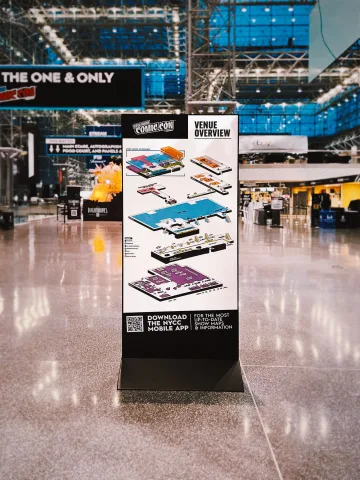
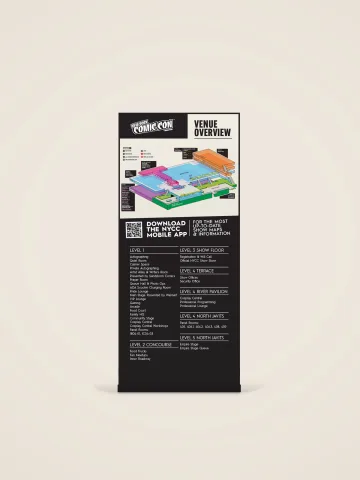
Signs came from many teams, and Operations, Finance, and our show vendors each needed a view of the same inventory. None of them worked from the same record.
Read the full storyShow less
The vendor inventory problem
Every year our vendors sent their own formatted documents listing what was in inventory. The names were often unclear and there were no images to check them against.
That left us guessing at what to keep year over year and what to discard because the copy on a sign was no longer accurate. The counts were frequently wrong as well. Pieces went missing, and there was no way to know what to expect.
The Signage Hub solution
Signage Hub is a single database for every ReedPop show. It started as a Google Sheet, built over two years of trial and error, with automations and tooling to cover the edge cases. Uploading a PDF converts and updates its preview image, file names are generated, and pricing accounts for the show and the vendor.
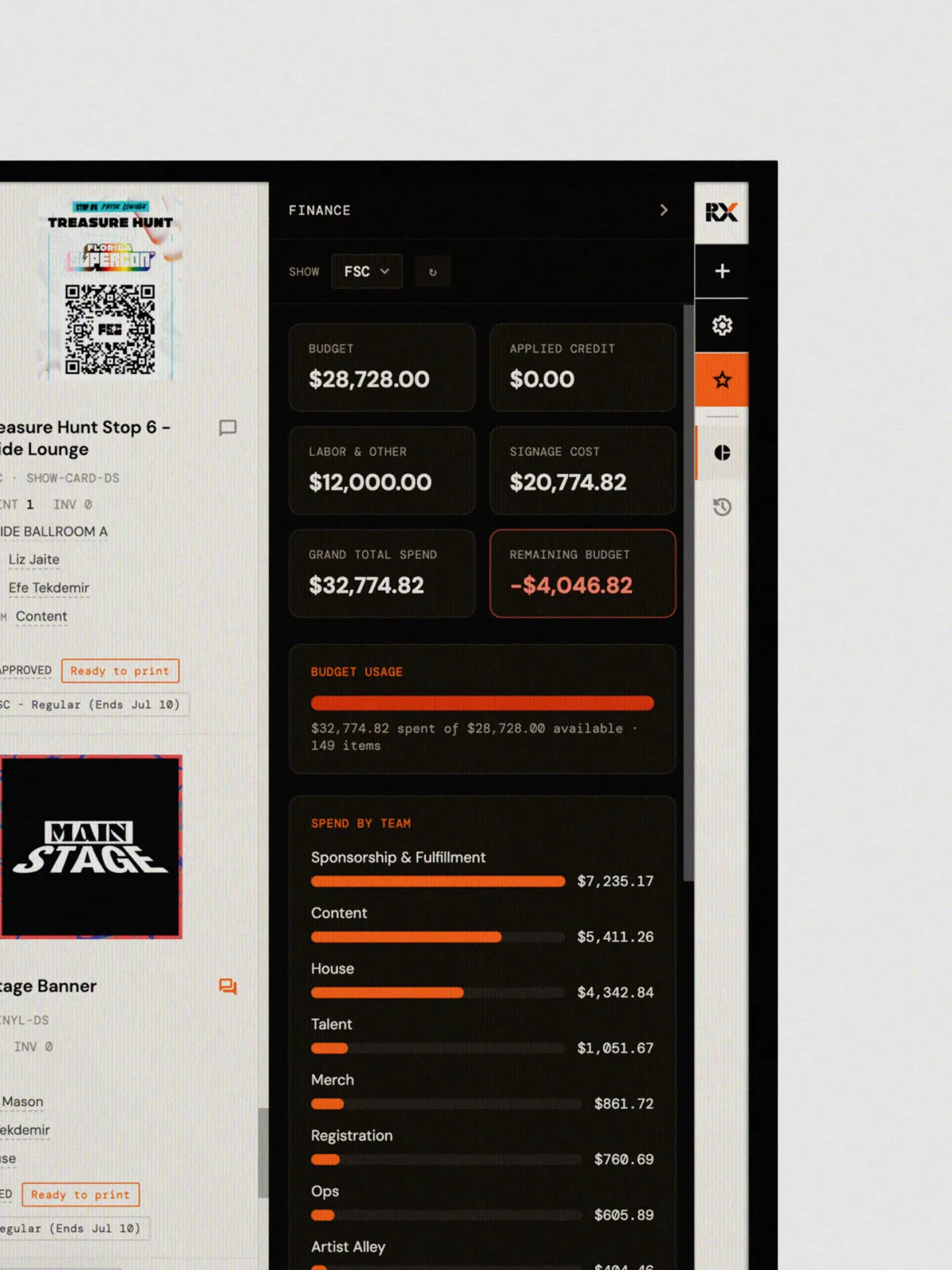
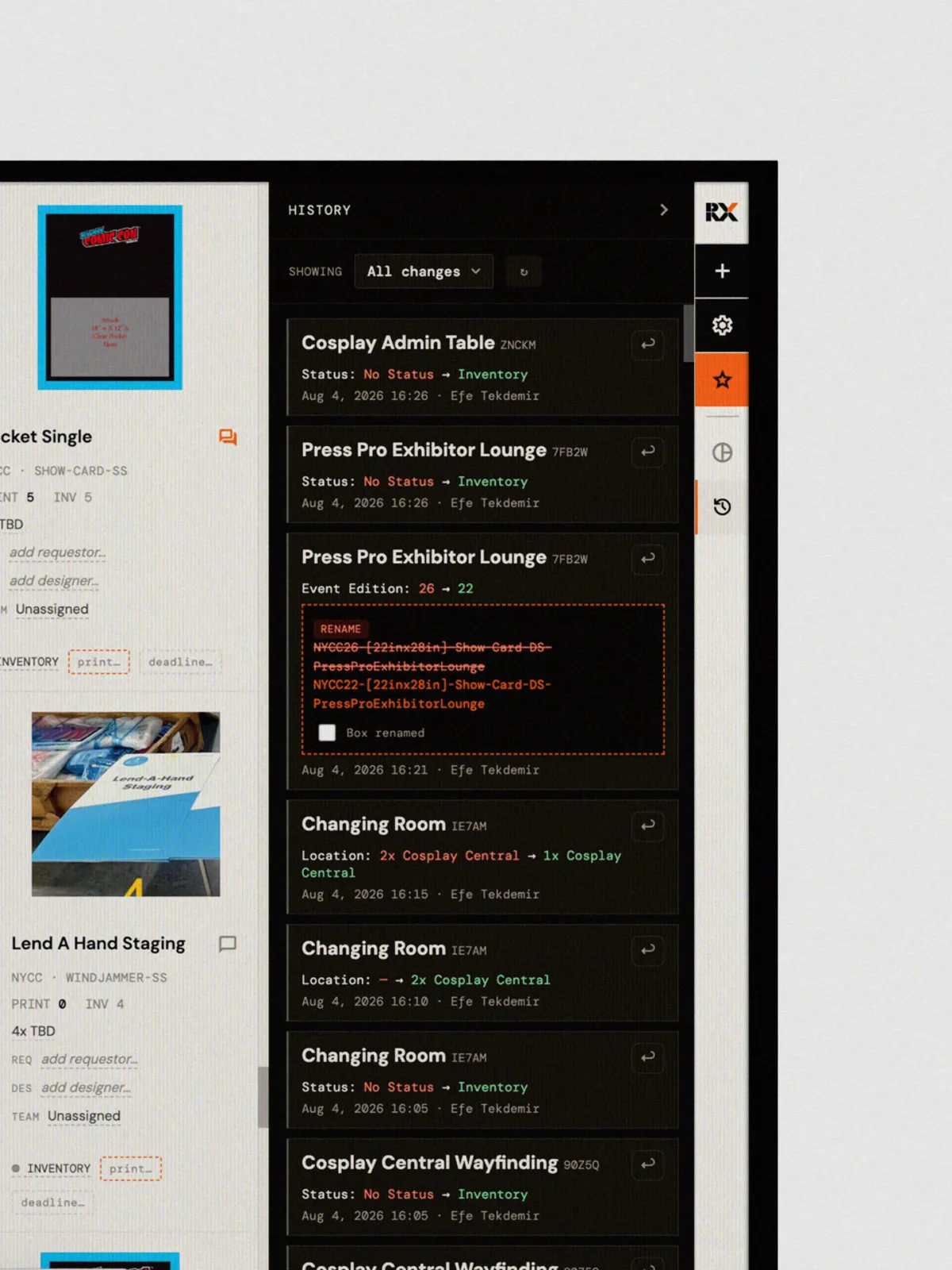
Once the sheet had proven the model, it needed an interface and a real time backend. Teams can review signs, read each other's feedback, sort, organize, and request new work in one place. The interface carries over everything the sheet already solved and ties quantity to location so the two never drift apart. The record now belongs to the team instead of arriving from a vendor once a year.
Data and automations
The workspace

Keeping it simple
The workspace has two main modes. The rest sit neatly in a sub bar. Inventory is every sign you own: organize by show, sort by type, adjust quantities, assign signs. Users see the stock, managers keep it in order. Proofing is what needs you. Assigned a sign? That view walks you through it. Design? Update? Review? It tells you.
Branding
Every sign gets a code
The backend tracks each sign by a five character code. The brand borrows it. Each code seeds a pattern of circles and squares, unique to that sign. Until the design lands, the pattern is the sign's face. Same code, same pattern, every time.
A motion language